Are oats gluten-free?
Oats themselves don’t contain gluten, but regular oats usually aren’t gluten-free: they’re grown, harvested and milled alongside wheat, barley and rye. Buy oats labeled gluten-free, which in the US means under 20 parts per million of gluten. Most people with celiac disease can eat those, and a few react even to pure oats.
 Plan your dinnersFree to start on iPhone, Android and the web.

Updated November 20, 2026
Why regular oats aren’t gluten-free
Gluten is a group of proteins in wheat, barley, rye and their crossbreeds. Oats aren’t one of those grains. The trouble is where they grow: oats share fields, trucks, silos and mills with wheat and barley, so a bag of regular oats can carry stray kernels of both. The Canadian Celiac Association says most commercially available oats in North America are contaminated with gluten-containing grains, and the Celiac Disease Foundation tells people to look for oats specifically labeled gluten-free.
What “gluten-free” on oats means
| On the package | What it means | For celiac disease |
|---|---|---|
| No gluten-free claim | Regular oats, handled with wheat and barley | Skip |
| “Gluten-free” (US) | Under 20 parts per million of gluten. The FDA says oats don’t need a certification to use the claim, but they must meet the limit | Fine for most |
| A certification logo (GFCO) | The Gluten Intolerance Group’s program requires 10 ppm or less | Fine for most |
| “Gluten-free oats” (Canada) | Allowed since May 2015 for specially produced oats at no more than 20 ppm, named as gluten-free oats wherever oats appear on the label | Fine for most |
| “May contain wheat” | Shared lines or fields. Not a gluten-free claim | Skip |
Gluten-free oats are made in two ways. Purity protocol oats are kept apart from wheat, barley and rye from the seed on, with dedicated fields and equipment and testing along the way. Sorted oats are regular oats cleaned by machines that pick out the other grains. The Gluten Intolerance Group calls both methods effective. Gluten Free Watchdog points out that “certified gluten-free” doesn’t mean purity protocol, and that the only way to know which you’re buying is to ask the maker. As one example of how a brand describes its checks, Bob’s Red Mill says it tests every incoming delivery with an ELISA test, holds its gluten-free products to under 20 ppm, and packs them in a separate gluten-free facility. We have no connection with any of these companies.
What the research says
| Study | Who | What it found |
|---|---|---|
| Lundin et al., Gut, 2003 | 19 adults with celiac disease, 50 g of oats a day for 12 weeks | Most did well. Some had bloating at first, and one developed gut damage and a rash, twice |
| Pinto-Sánchez et al., Gastroenterology, 2017 | 28 studies; 8 trials with 661 patients, all using pure oats | No change in symptoms, biopsies or blood tests after 12 months of oats. The authors rated the evidence low quality |
| Rodríguez et al., Frontiers in Nutrition, 2022 | 25 oat products labeled gluten-free, sold in Chile | 36% were above 20 ppm of gluten |
So the oat isn’t the usual problem, the label is. A small number of people with celiac disease do react to pure oats, and Health Canada and the Celiac Disease Foundation both say to add oats with your doctor or dietitian. The Canadian Celiac Association suggests waiting until celiac blood tests are back to normal, then starting with 25 to 70 grams of dry rolled oats a day for an adult and 10 to 25 grams for a child.
What Gluten’s checker says about oats
The Gluten app checks every recipe for each person at the table. Its food checker reads oats with no gluten-free label as a “No” for celiac disease and for a gluten-free diet. Oats labeled gluten-free fit a gluten-free diet, and get “Check first” for celiac disease, because some people with celiac react to them.
| On the ingredient list | Celiac disease | Gluten-free | AIP |
|---|---|---|---|
| Rolled oats | No | No | No |
| Steel cut oats | No | No | No |
| Oat flour | No | No | No |
| Granola | No | No | No |
| Certified gluten-free oats | Check first | Fits | No |
| Gluten-free oat flour | Check first | Fits | No |
| Gluten-free granola | Check first | Fits | No |
What we found in our own recipes
On November 20, 2026 we ran the checker over all 2,569 recipes published on gluten.ai. 103 of them use oats, oat flour, oat bran or granola: 33 breakfasts, 40 snacks, 28 dinners and a few others. 39 call for every oat ingredient gluten-free by name, and that includes all 28 dinners, where oats bind meatballs, kofta, burgers and falafel or make a quiche crust.
| For one person with… | Fits as written | Check first | Not as written |
|---|---|---|---|
| Celiac disease | 0 | 45 | 58 |
| A gluten-free diet (the gluten-free-by-name recipes) | 37 | 0 | 2 |
| AIP | 0 | 0 | 103 |
Of the 58 that don’t fit celiac disease as written, 56 are ruled out by oats or granola with no gluten-free label, all of them breakfasts, snacks and bakes: overnight oats, baked oatmeal, granola and muffins, written for other diets, like blood pressure or Mediterranean, where nobody needed the label. The fix is one word on the shopping list: the same recipe made with oats labeled gluten-free moves from “No” to “Check first”. When you add a table with celiac disease to the Gluten app, it asks for that word in every recipe it writes.
Swaps when oats are out
| Instead of | Try | Worth knowing |
|---|---|---|
| Oatmeal | Quinoa flakes, buckwheat groats or millet porridge | Naturally gluten-free; buy them labeled. See is quinoa gluten-free? |
| Oats in meatballs or meatloaf | Gluten-free breadcrumbs or almond flour | Almond flour is out for a tree nut allergy |
| Oat flour in baking | A gluten-free flour blend | Blends vary. Use the one the recipe was tested with |
| Granola | Granola labeled gluten-free, or a grain-free one made from nuts, seeds and coconut | Grain-free granola is out for a nut allergy, and AIP leaves out nuts and seeds |
If you’re cooking for several diets at once, the AIP vs other diets guide shows what each one takes out, and our celiac recipes are written with the label words already in. The Gluten app checks every recipe against everyone at your table.
Recipes to start with
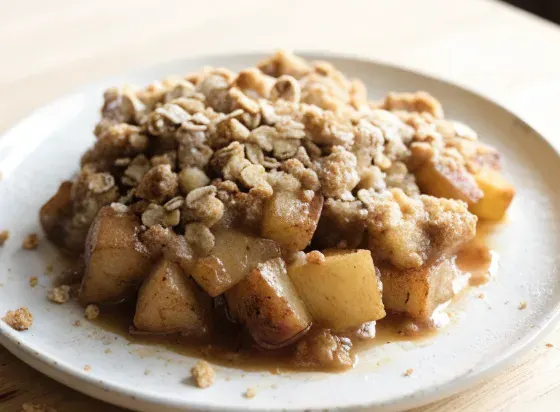

Gluten-free apple crisp
Baked cinnamon apples under a golden oat crumble, warm from the oven, with crisp edges and a soft middle.
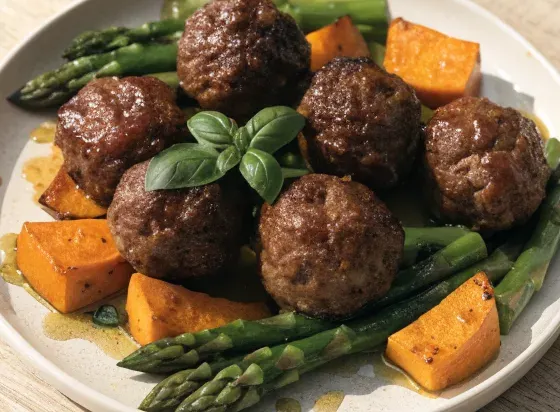

Maple-Glazed Meatball Sheet Pan with Butternut Squash and Asparagus
Juicy baked meatballs with caramelized squash, tender asparagus and a sweet maple glaze, all from one pan.
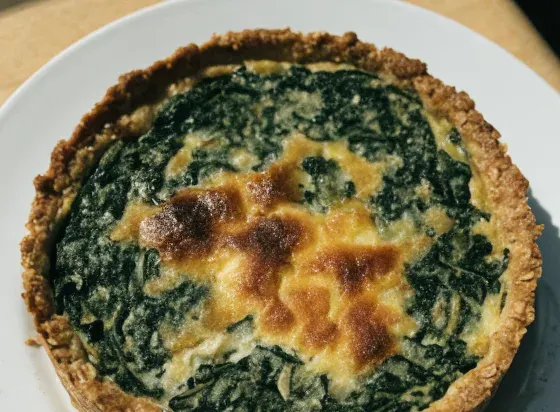
Spinach Quiche with an Oat Crust
A cozy French-style quiche with garlicky spinach and a crisp, tender oat crust. It’s lovely warm, with a softly set egg filling.
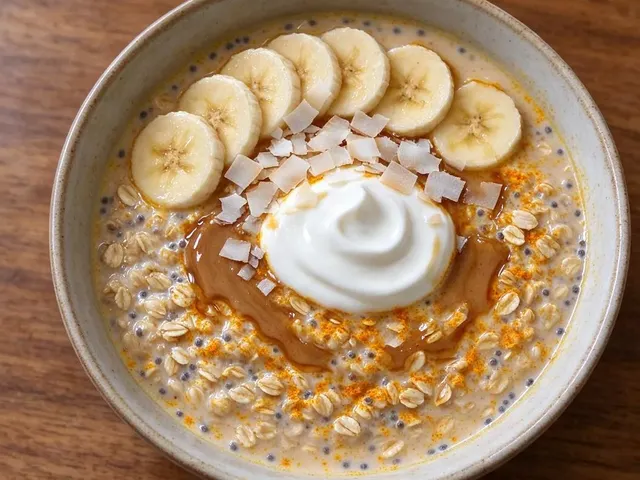

Golden Milk Overnight Oats
Rolled oats soaked in coconut milk and chia seeds, topped with sliced banana and almond butter for a morning meal.
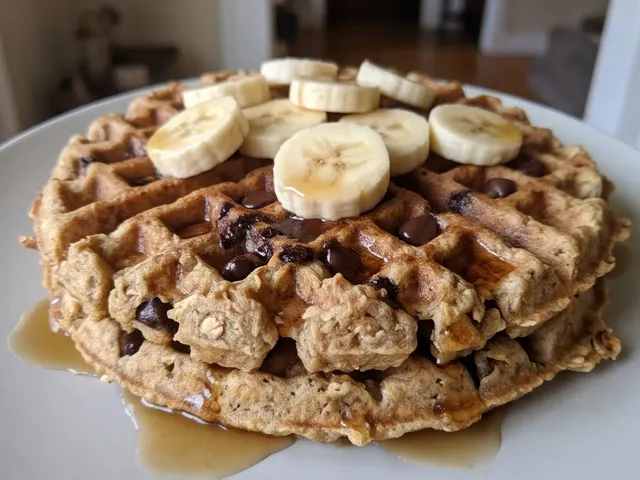
7-Ingredient Vegan Gluten-Free Waffles
Waffles made with oats, a flour blend, almond milk and flax cook crisp outside and soft inside, with cinnamon and vanilla. The batter rests 5 to 10 minutes first.
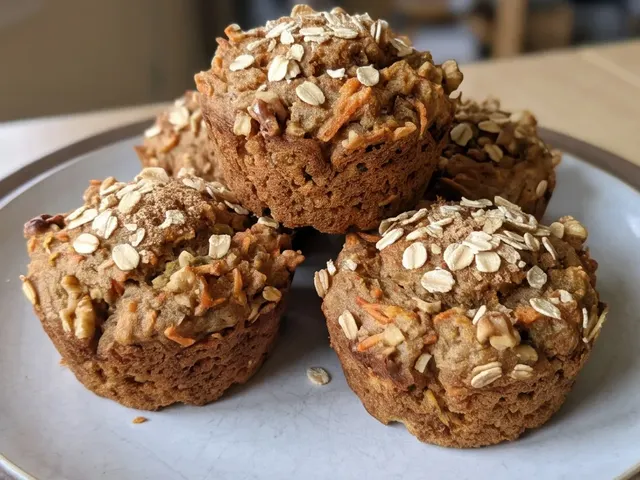
1-Bowl Carrot Apple Muffins (Vegan + GF)
Carrot, apple, banana, and oats bake into tender muffins with a golden top and walnut crunch. Mix the batter in one bowl, then bake for 32-36 minutes.




Cooking for more than one diet?
Add everyone you cook for, with their allergies, diets and ages. Gluten checks every recipe for each of them and tells you what to change for anyone who can’t eat it as written. It’s free to start.
Plan your dinnersQuestions
Do oats have gluten in them?
Not their own. Gluten is a group of proteins in wheat, barley and rye. Oats have a different protein, avenin, which the Celiac Disease Foundation says is similar in structure to gluten but, in the studies it cites, pure oats don’t damage the gut of people with celiac disease. The gluten in regular oats comes from those other grains, picked up in the field, the truck or the mill.
Is oatmeal gluten-free?
Only when it’s made with oats labeled gluten-free. A canister or packet without that label is regular oats, and the Canadian Celiac Association says most regular oats in North America are contaminated with gluten grains. Flavored packets can add other ingredients too, so go by the words on the package in your hand.
Can people with celiac disease eat oats?
Most can eat oats labeled gluten-free. A 2017 review of 28 studies found no sign that pure oats changed symptoms, gut biopsies or blood tests in people with celiac disease, though the evidence was low quality. A small number react even to pure oats, so add them with your doctor or dietitian, starting small.
How much gluten-free oatmeal can someone with celiac eat?
The Canadian Celiac Association suggests starting with 25 to 70 grams of dry rolled oats a day for adults and 10 to 25 grams for children, once celiac blood tests have come back to normal, and going up slowly. Health Canada’s 2007 position gave 50 to 70 grams for adults and 20 to 25 grams for children.
What is “purity protocol” oats?
Oats grown and handled to keep wheat, barley and rye out from the seed on: clean seed, dedicated fields and equipment, and testing. Other gluten-free oats are regular oats cleaned by machines that sort out the other grains. Gluten Free Watchdog notes that the label usually doesn’t say which, so ask the maker if it matters to you.
Is granola gluten-free?
Not unless it says so. The Celiac Disease Foundation warns that granola and granola bars are often made with regular oats, and some add barley malt or wheat. Look for “gluten-free” on the bag.
Are oats allowed on AIP?
No. Cleveland Clinic lists oats with the grains the AIP elimination phase leaves out, gluten-free or not. Our AIP diet food list has what fits instead.
Sources
- FDA: Questions and answers on the gluten-free food labeling rule
- FDA: “Gluten-free” means what it says
- Celiac Disease Foundation: Gluten-free oats, what’s the deal?
- Celiac Disease Foundation: Sources of gluten
- Health Canada: Gluten-free labelling claims for products containing specially produced gluten-free oats
- Health Canada: Celiac disease and the safety of oats (2007, archived)
- Canadian Celiac Association: Oats statement
- Gluten Intolerance Group: Are oats and oat flour gluten-free?
- Gluten Free Watchdog: Oats produced under a gluten-free purity protocol
- Pinto-Sánchez et al., Safety of adding oats to a gluten-free diet for patients with celiac disease (Gastroenterology, 2017)
- Lundin et al., Oats induced villous atrophy in coeliac disease (Gut, 2003)
- Rodríguez et al., Commercial oats in gluten-free diet: a persistent risk for celiac patients (Front Nutr, 2022)
- Bob’s Red Mill: Our quality process
- Cleveland Clinic: What is the AIP (autoimmune protocol) diet?
More guides
- A gluten-free Thanksgiving menu, with a day-by-day timeline
- Is cornstarch gluten-free?
- Is soy sauce gluten-free?
- Is quinoa gluten-free?
- Is farro gluten-free?
- AIP diet food list: what to eat and what to avoid
- AIP vs soy-free, dairy-free, gluten-free and egg-free diets
- Are dino nuggets gluten-free?
- How often does an AI recipe break a food restriction? We tested 11 models
- Is there a gluten-free, dairy-free meal planner app for PCOS?
- AIP chicken recipes the whole family can eat
- Alpha-gal chili recipes the whole family can eat
- Is mayonnaise gluten-free?
- What can you eat with alpha-gal syndrome?
- Low-histamine food list: what to eat and what to avoid
- Low-histamine diet: how it works, step by step
- Low-histamine fruits: which to eat and which to skip
- Low-histamine vegetables: the safe list and the skip list
- Low-histamine cheese: which cheeses and dairy are safe?
- Low-histamine nuts and seeds: which are safe to eat?
- Low-histamine breakfast: 8 easy ideas and what to skip
- Low-histamine snacks and sweets: 9 ideas, checked
Gluten gives food ideas, not medical advice. Recipes are checked against the restrictions you enter, but always check labels for allergens and cross-contact, and talk to your doctor or dietitian about your diet.