Is quinoa gluten-free?
Yes. Quinoa is a seed, not a kind of wheat, and it has no gluten. It can pick up gluten where it’s grown, milled or packed, so if you’re cooking for someone with celiac disease, buy a bag labeled gluten-free.
 Plan your dinnersFree on iPhone, Android and the web.
Updated November 5, 2026
Why quinoa has no gluten
Gluten is a mix of proteins in wheat, barley, rye and crossbreeds of those grains. Quinoa isn’t related to any of them: it’s the seed of a leafy plant, cooked and eaten like a grain. The Celiac Disease Foundation lists it among the naturally gluten-free grains and seeds, and Harvard’s Nutrition Source says it can be eaten safely by people with celiac disease.
What to check on the bag
Like other naturally gluten-free grains, quinoa can pick up gluten from wheat, barley or rye in the field, the mill or the packing line. That’s the risk, not the quinoa itself.
- Look for “gluten-free” on the bag. In the US, that claim means under 20 parts per million of gluten.
- Skip “may contain wheat”. The Celiac Disease Foundation’s labeling guide says to avoid naturally gluten-free grains, quinoa included, that aren’t labeled gluten-free but say “may contain” or “made on shared equipment with” wheat.
- Skip bulk bins. Shoppers move the scoops between bins.
- Read mixes. Quinoa pasta, flour blends, boxed pilafs and their seasoning packets can have wheat or barley in them.
- Ask at restaurants. Quinoa is often cooked in stock, and some stock has wheat. A shared pot or strainer can carry gluten too.
What the research says
In a 2012 lab study, researchers tested 15 kinds of quinoa grown in the Andes. Most had no measurable amount of the proteins that trigger celiac disease. Two, Ayacuchana and Pasankalla, set off an immune response in cells and gut tissue from people with celiac disease. That happened in a dish, not in people, and the authors asked for studies in people.
That study came in 2014: 19 adults with celiac disease added 50 grams of quinoa a day to their gluten-free diet for six weeks. It was well tolerated and didn’t make their condition worse, and the measures of their gut lining stayed normal or improved slightly. It was small and short, and the authors called for longer studies.
So for most people with celiac disease, quinoa labeled gluten-free is a good swap for wheat grains. If you eat it and get symptoms, stop and talk to your doctor or dietitian.
How to cook it so it isn’t bitter
- Rinse it in a fine sieve if the bag says to. That washes off saponins, the natural coating that makes quinoa taste bitter.
- Use 2 parts water, or gluten-free stock, to 1 part quinoa. Bring it to a boil, cover, and simmer on low for about 15 minutes, until tender.
- Take it off the heat, leave the lid on for 5 minutes, then fluff it with a fork.
A cooked cup has about 8 grams of protein and 5 grams of fiber, with all nine essential amino acids. It stands in for couscous or bulgur in a salad like tabbouleh, and for rice next to a stir-fry.
Which other grains are gluten-free?
| Grain | Gluten-free? | Worth knowing |
|---|---|---|
| Quinoa | Yes | Buy it labeled gluten-free |
| Rice | Yes | White, brown and wild |
| Buckwheat | Yes | It isn’t wheat, despite the name. Soba noodles are often part wheat, so read the label |
| Millet, sorghum, teff, amaranth | Yes | Buy them labeled gluten-free |
| Corn and polenta | Yes | See is cornstarch gluten-free? |
| Oats | Only if labeled | Regular oats often pick up wheat. Buy oats labeled gluten-free |
| Couscous | No | It’s made from wheat |
| Bulgur and freekeh | No | Both are wheat |
| Farro, spelt, einkorn, emmer | No | Old kinds of wheat |
| Orzo | No | A small wheat pasta, unless the box says gluten-free |
| Barley and rye | No | Malt is usually made from barley |
Cooking for a table with several diets
Quinoa fits a gluten-free, dairy-free or vegan table, but not AIP: the AIP food list has what to use instead. Browse celiac recipes and gluten-free dinner ideas, or add your family to the Gluten app: it checks each recipe against everyone at the table and tells you what to change for anyone who can’t eat it as written.
Recipes to start with
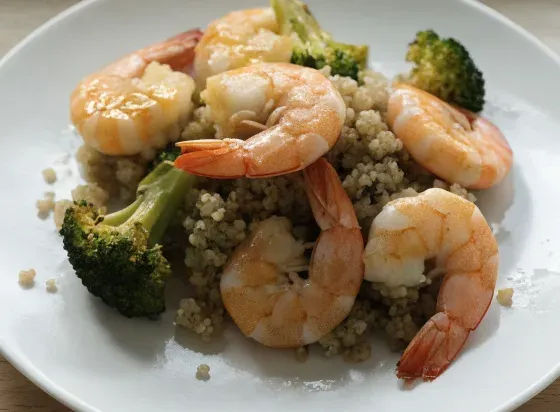

Lemon Garlic Shrimp with Quinoa and Roasted Broccoli
Golden shrimp in garlicky lemon sauce over fluffy quinoa, with crisped broccoli and cool avocado on the side.
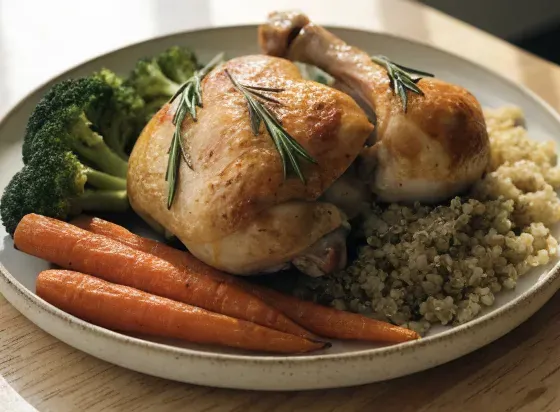

Lemon-Rosemary Roast Chicken with Quinoa
Crispy-skinned chicken thighs roasted with sweet carrots and garlic, served over lemony quinoa — a one-pan dinner.
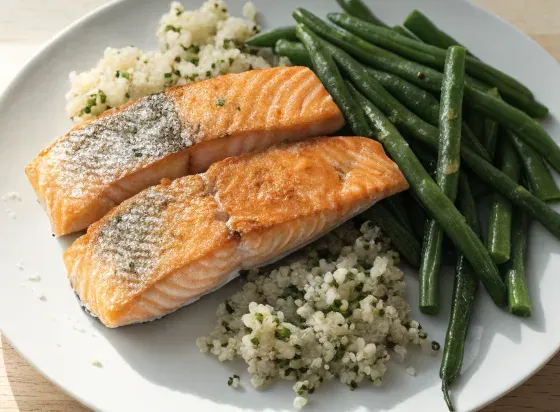

Crispy-Skin Salmon with Herbed Quinoa and Garlic Green Beans
Pan-seared salmon with crackly skin over lemony herb quinoa, with garlicky green beans on the side.
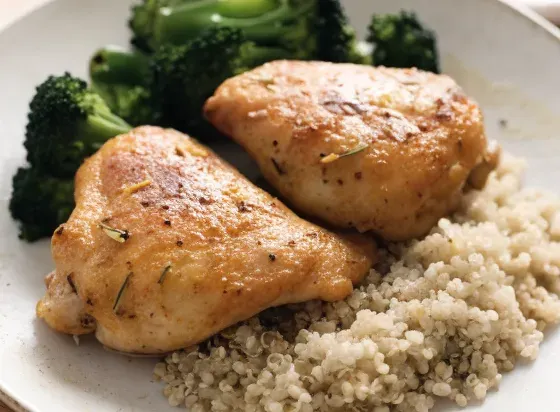
Maple-Dijon Chicken Thighs with Roasted Broccoli and Quinoa
Sticky glazed chicken and charred broccoli over fluffy quinoa, all from one sheet pan.
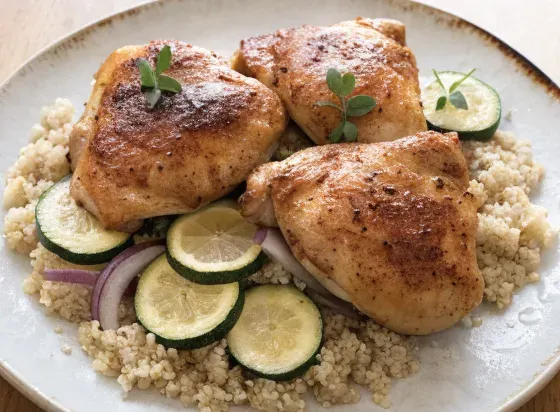
Smoky Sheet-Pan Chicken Thighs with Lemon Zucchini and Quinoa
Crisp paprika chicken roasted over sweet red onion, with lemony zucchini and fluffy quinoa to soak up the juices.
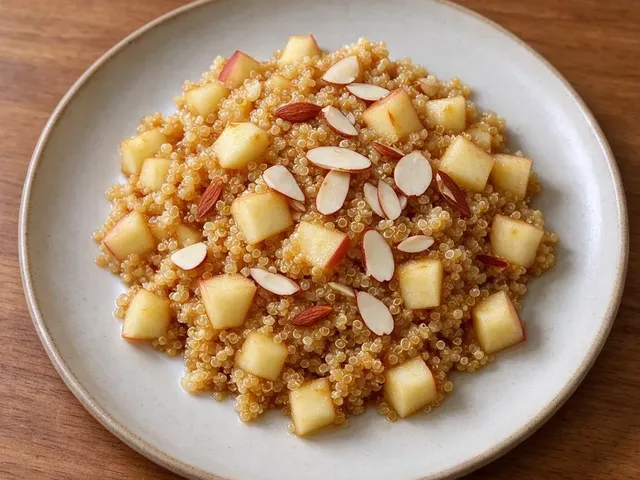

Apple-Cinnamon Quinoa Bowl
Quinoa simmered in milk with apple, cinnamon, and salt, finished with almonds and honey.



Cooking for more than one diet?
Add everyone you cook for, with their allergies, diets and ages. Gluten checks every recipe for each of them and tells you what to change for anyone who can’t eat it as written. It’s free.
Plan your dinnersQuestions
Does quinoa have gluten?
No. Gluten is a protein in wheat, barley, rye and crosses of them. Quinoa is the seed of a different plant, a relative of spinach and beets. Gluten only gets in through contact with those grains in the field, the mill or the packing line.
Can people with celiac disease eat quinoa?
Most can. In a 2014 study, 19 people with celiac disease added 50 grams of quinoa a day to their gluten-free diet for six weeks, and it didn’t make their condition worse. Buy quinoa labeled gluten-free, and if you get symptoms after eating it, talk to your doctor or dietitian.
Is quinoa a grain?
Strictly, it’s a seed. You cook and eat it like a grain, so it’s often called a pseudo-grain, and Harvard’s Nutrition Source counts it as a whole grain.
Why does quinoa bother me if it’s gluten-free?
Ask your doctor, because there’s no single answer. Two things worth ruling out: gluten from cross-contact, if the bag doesn’t say gluten-free, and quinoa itself. In a 2012 lab study, 2 of 15 quinoa varieties set off an immune response in cells from people with celiac disease. Most varieties didn’t.
Is quinoa allowed on AIP?
No. Cleveland Clinic lists quinoa with the grains to leave out in the elimination phase of AIP. Cauliflower rice and sweet potato are the usual swaps.
Do I need to rinse quinoa?
Check the bag. Most packaged quinoa is already rinsed, but some brands say to rinse it again to wash off saponins, a natural coating that tastes bitter. A fine sieve under cold water takes a minute.
Is quinoa pasta or quinoa flour gluten-free?
Not always. Products made with quinoa can be blended with wheat or other flours. Read the ingredients and look for “gluten-free” on the package.
Sources
- Harvard T.H. Chan School of Public Health, The Nutrition Source: Quinoa
- Celiac Disease Foundation: Gluten-free foods
- Celiac Disease Foundation: Food labeling guide (2024)
- Celiac Disease Foundation: Sources of gluten
- Zevallos et al., Variable activation of immune response by quinoa prolamins in celiac disease (2012)
- Zevallos et al., Gastrointestinal effects of eating quinoa in celiac patients (2014)
- Cleveland Clinic: What is the AIP (autoimmune protocol) diet?
- FDA: “Gluten-free” means what it says
Gluten gives food ideas, not medical advice. Recipes are checked against the restrictions you enter, but always check labels for allergens and cross-contact, and talk to your doctor or dietitian about your diet.